Youth Council
The Hawaiʻi SDG Youth Council is a student-led, peer-to-peer learning, advocacy, and action-based group focused on the Aloha+ Challenge, also supporting the local and cultural implementation of the UN Sustainable Development Goals. The Council, organized by Hawaiʻi Green Growth, explores global educational and leadership opportunities while rooted in local values, culture and sustainable action, inspired by a Kamehameha Schools-led local-global educational program.
Currently, the group supports high-schooler aged students across the state. A formalized mechanism for joining is expected in late 2026.
Interested in joining?
Youth Leadership for the Aloha+ Goals
The Hawai’i Youth Council focuses on bringing local ideas to the global stage, and that starts with Hawaiʻi’s Aloha+ Challenge. They shared their perspectives on each of the six Goals in the youth-led section of the 2025 Voluntary Local Review, available here.
Hover over each Aloha+ Goal to see youth contributions to its progress.
Clean Energy Transformation
Hawai‘i is (and was!) a leader in the clean energy movement, especially in being the first state to set such an ambitious clean energy target.
“I think Hawai‘i has always been a step ahead in many ways. We were pioneers in electricity, had the first colored newspaper, and boasted a 90% literacy rate. Our ahupua‘a system was incredibly smart, and there’s so much that other countries could learn from our approach to caring for the ‘āina as if it were family.”
—Ka‘uiki Kalama Junior, Hālau Kū Mana
When asked what the youth can do to ensure sustainable transformations across the goals — especially big transformations, like a 100% energy commitment by 2045 — the students spoke to the power of their advocacy.
“Our leaders might not be here in 10 years, but we will”
—Tevyn Apo, Kamehameha Schools, Maui
Local Food Production and Consumption
“I feel the most important aspect of shifting social perspective is starting through youth education. Recognizing the personal connection to, let’s say, a kalo plant by telling our keiki that this kalo plant is our ancestor Hāloa will give them a deeper connection to ‘āina in the long run and instill in them a kuleana to forever protect this ‘āina like family. Compare this to trying to tell an adult that this plant is their ancestor, they would probably brush this off. The youth are our future.”
—Haven De Silva, Kamehameha Schools Maui
Young men from Kinai ‘Eha — a workforce training program — shared their experience of volunteering on farms in exchange for mai‘a, kalo, and other healthy and locally produced foods to help cut down on the expense of groceries, noting the concern of rising food costs and the desire to eat local.
Natural Resources Management

Maui students reflected on the water shortages the island continues to experience. After the redirection of water from the kahawai (streams) for the development of plantations, the flow of fresh water was never returned to communities. Today, hotels and other commercial tourist industries have wider access to water than many locals in the area — which prompted conversations on stewardship and caretaking of natural resources, and who is best positioned to care for them. The students advocated for more opportunities to expand their education outside of the classroom to engage with and steward these resources themselves and collaborate with the officials responsible with managing them. They also shared the hands-on experiences they are currently involved in, such as restoring watersheds and cultivating native plants and gardens at their schools, as a form of building and sustaining Hawai‘i’s natural resources both now and for the future.
Green Workforce and Education

When discussing the Green Workforce and Education Goal, students expressed their concern regarding the lack of high-paying jobs and opportunities for Native Hawaiians, referencing a host of issues that their communities are facing, including:
Employment
• Major Concerns: Observable and growing education and employment gap; Lack of visible opportunities: where do locals go for jobs? Fear of being pushed out: will it be too expensive for me to live here in the future?
Education
• Major Concerns: Students don’t feel like their schools are setting them up or preparing them for the future/jobs and/or success
Potential Solutions
• Mandatory restoration effort/day for people (like jury duty!) with incentives of something like paid leave, education credits, state holidays
• Economic development/business required to also benefit and uplift the lāhui and the ‘āina
• Shifts in the value of education societally (and how we value teachers, the classroom, resources, and the learning environment)
Solid Waste Reduction

“Before colonization, “‘ōpala” [trash] wasn’t a word because Hawaiians didn’t believe in “throwing away”.
—Kaliko Teruya, Lahainaluna High School
Students provided various issues they’d observed regarding waste like the lack of education and awareness and their own experiences with waste and overconsumption as a result of moving/relocation. They provided possible solutions and steps to take to get rid of these issues, which can be further explored in the full VLR.
Smart Sustainable Communities
“For the future of Hawai‘i, I want Hawaiians to have a chance to come back to the Hawaiian Islands. I want to be able to continue cultural practices and have more schools and programs teaching the Hawaiian people about their culture. I want Hawai’i to be like in our mo’olelo, where it talks about Hawai‘i being a subsistence economy in giving and sharing to those in our community and being able to distribute what we have to everyone… For Island Earth, I want humans to actually make a change in what they’re doing to the ‘āina and see the harm we’ve all done over time. I want humans to be more mindful of what we’re doing and try our best to change our ways, or at least change one thing we do in life. I want us humans to care more about our ‘āina, our home.”
—Kwyn Joseph (Grade 7), Mālama Honua Public Charter School
Current Initiatives
Community Engagement around Shared Values
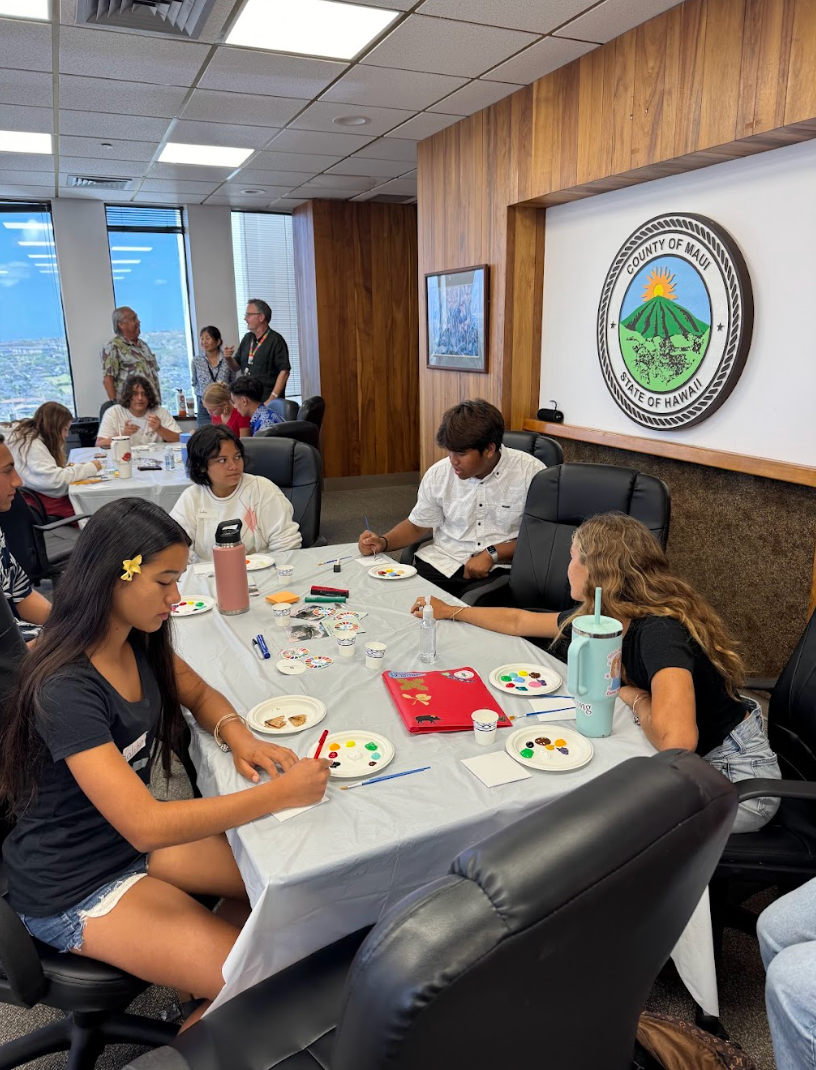
The Youth Council leadership represents Aloha+ locally here in Hawaiʻi, serving as spokespersons for the Challenge and providing examples and opportunities for other young people in their communities to take action on the Aloha+ Goals. The students have hosted peer-to-peer workshops in middle and high schools across the state to discuss current Gaol progress, what they perceive to be barriers in Goal achievement, and the future they want to see for Hawaiʻi. They’ve led Policy discussions with state and county elected officials, including a Youth Policy Dialogue at the 2024 Hawai’i Sustainability Summit on Hawai’i Island, and have advocated for legislation at the State Capitol. They organize community events around ocean cleanups and feeding their neighbors. They write poetry and op-eds and connect their peers to the challenges they see with proposed ways they can intervene. These young leaders build connections within their communities, design school projects, and drive real action both at their schools and beyond on the Aloha+ Challenge as a framework for sustainable action and a vision for the future.
Peer Connection Across the Pacific
Youth Council representatives have brought their knowledge and experiences across the Pacific region, sharing with both fellow youth leaders and adult decision-makers to help shape the conversation around island sustainability.
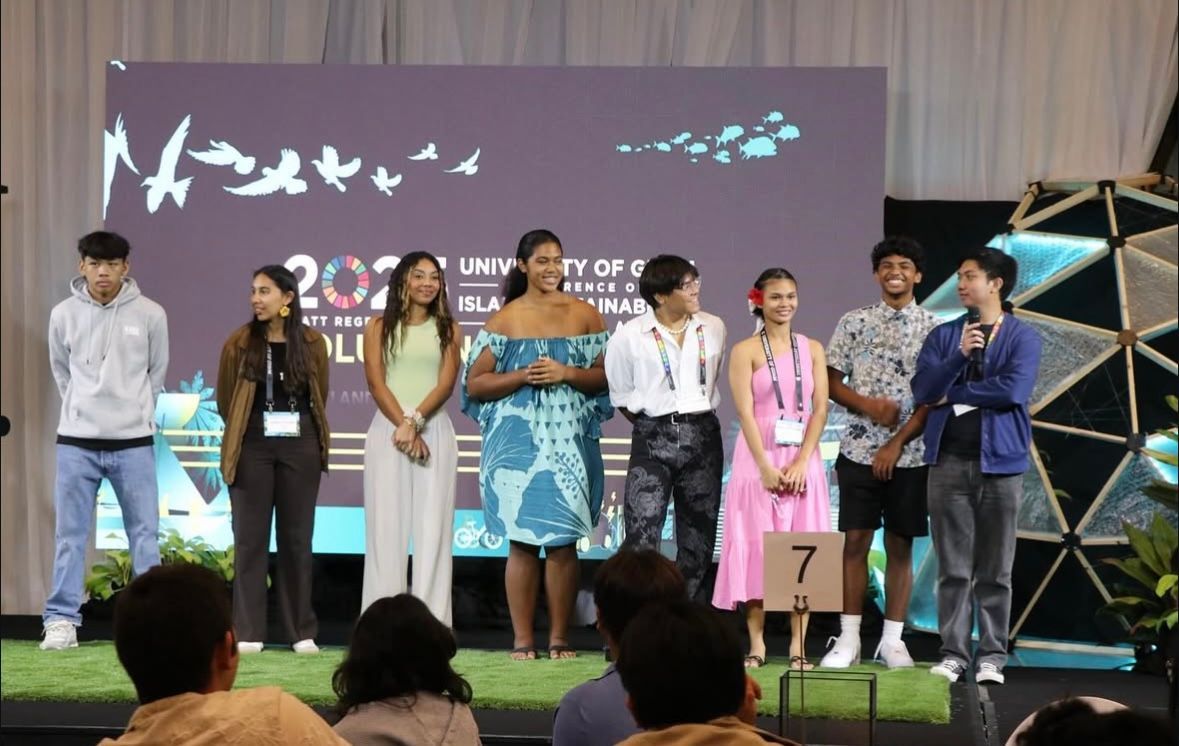
In 2025, Youth Council members visited Guam to participate in the first Green Growth Summit at the Conference on Island Sustainability, as well as the Island Youth Summit, alongside Youth Councils and Congresses from Saipan, Palau, and Guam. The Hawaiʻi Youth Council offered panel remarks during the Green Growth Summit that connected the Aloha+ Goals to concrete youth action, as well as what it means to be acting as a “future ancestor.” At the Island Youth Summit, they designed island solutions based on indigenous knowledge and ancestral wisdom for a panel that included Guam Governor Lourdes Leon Guerrero and Republic of the Marshall Islands President Hilda C. Heine.
Hawaiʻi Youth Leadership on the Global Stage
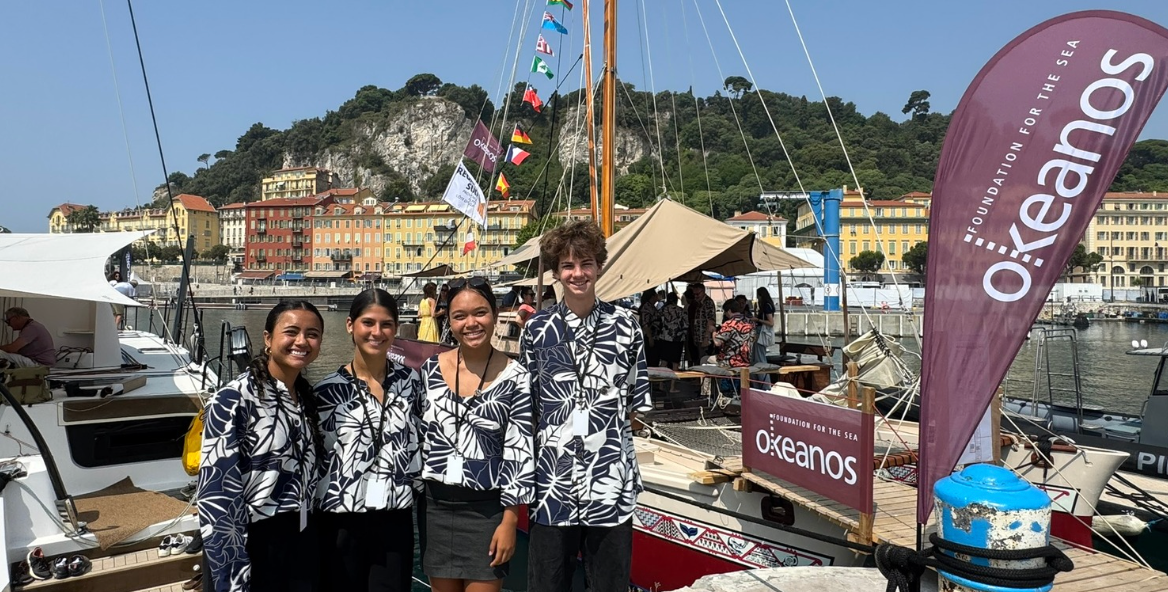
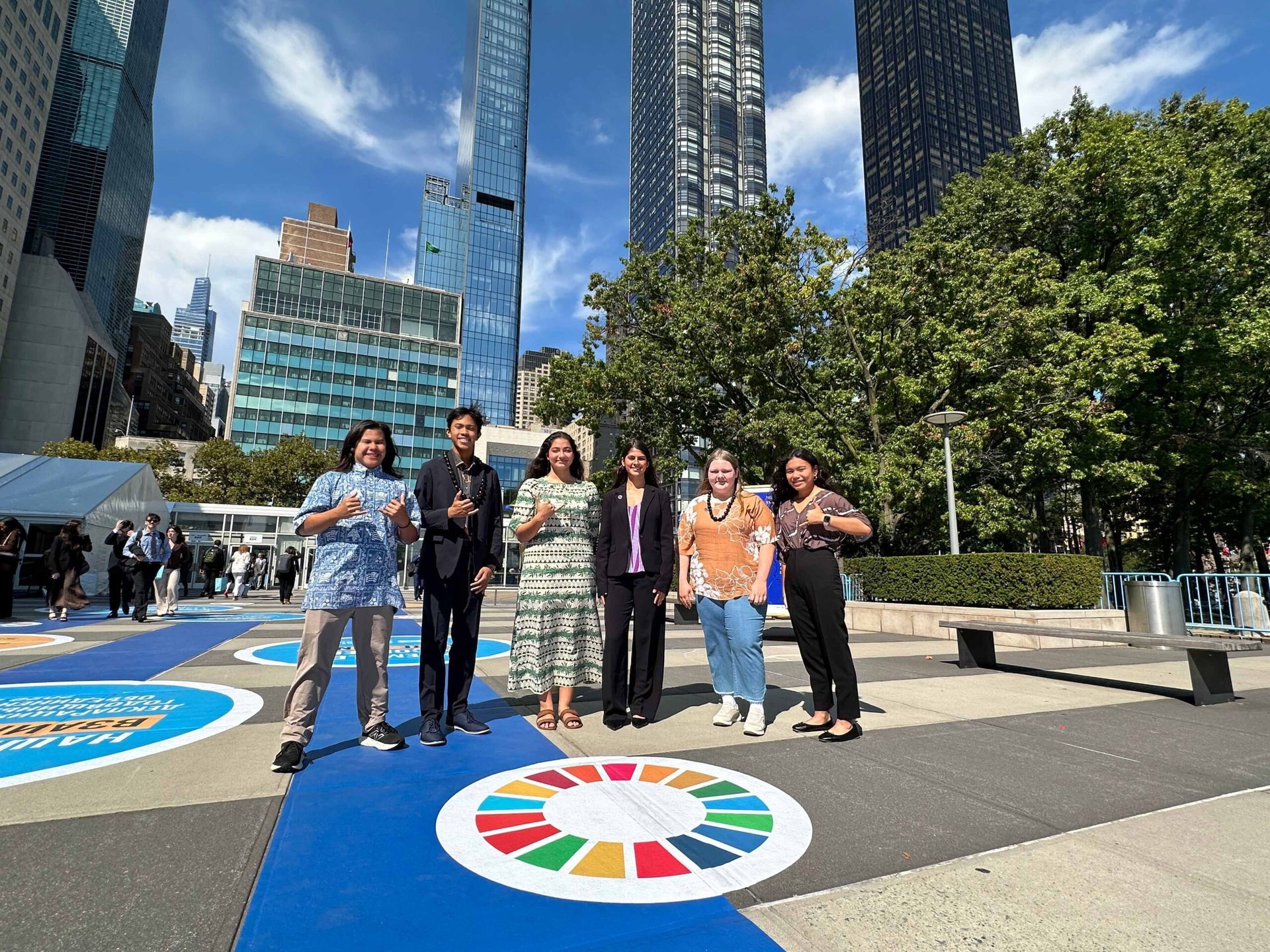
The SDG Youth Council has represented Hawaiʻi globally at various international events, from the UN Summit of the Future in New York, to the UN Ocean Conference in Nice, France – advocating for island-led solutions and approaches to protecting the ocean and life below water (SDG 14) – and MONDIACULT, the cultural policy conference hosted by UNESCO in Barcelona, Spain. At every event, the Youth Council representatives hosted panels and discussions, liaised with policymakers and global leaders, and spoke to and advocated for change they wish to see in the world and how Hawaiʻi was leading the way.
Youth Council
Co-Chairs
Paul Parish
Kamehameha Schools
Samantha Happ
Hawaiʻi Green Growth